America at 250 Educator Summit
Engaging Learners through Civics,
Inquiry, and Media Literacy
Wednesday, August 5th, 2026
Wisconsin Historical Society
Schedule Overview
| 2:00 PM: | Arrival & Registration |
| 2:30 PM: | Welcome & Introduction |
| 2:50 PM: | “The Space that We Were In”: Navigating Ideals and Realities of the Revolutionary Era |
| 3:35 PM: | Break |
| 3:50 PM: | America@250: Sparking Inquiry around Our Past, Present, and Future |
| 5:00 PM: | Adjourn |
| EVENING: | Dinner on your own |
Plenary Descriptions
“The Space that We Were In”: Navigating Ideals and Realities of the Revolutionary Era
We are honored to welcome Professor Christy Clark-Pujara to open the summit with an exploration of the complexity of the people, places, values, and experiences of the time leading up to and after the American Revolution. Drawing directly from primary sources, including the Declaration of Independence, the U.S. Constitution, and the Northwest Ordinance, and the 1848 Wisconsin Constitution, Dr. Clark-Pujara will ground our learning with an examination of the questions, perspectives, and actions that shaped our histories, as both a new nation and later a state, and how those histories connect to our lives today.
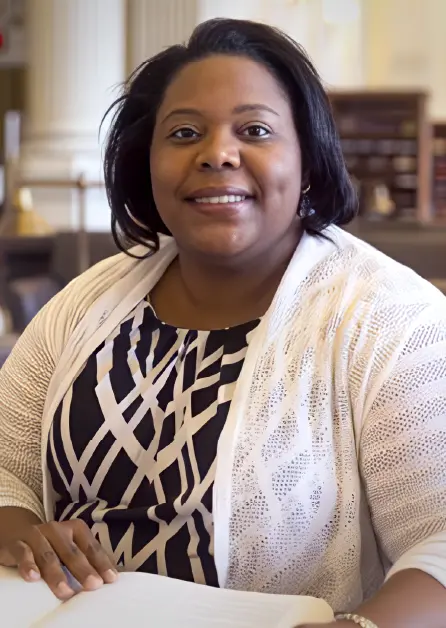
PRESENTER
Christy Clark-Pujara
Christy Clark-Pujara is the Chair and a Professor of History in the Department of African American Studies at the University of Wisconsin–Madison and a historian of colonial North America and the early American Republic. Her research focuses on the experiences of Black people in French and British North America in the 17th, 18th, and 19th centuries. She is particularly interested in retrieving the hidden and unexplored histories of African Americans in areas that historians have not sufficiently examined—small towns and cities in the North and Midwest.
America@250: Sparking Inquiry around Our Past, Present, and Future
Join us for an inspiring educator panel connecting the American Revolution and possibilities for inquiry-based learning. During the session, we’ll highlight educational resources made to accompany the new documentary THE AMERICAN REVOLUTION from Ken Burns, Sarah Botstein, and David Schmidt, as well as an episode of The Look Back that explores Wisconsin history during the Revolutionary Era. We’ll share insights around how we can leverage the America@250 milestone to engage learners in asking questions, exploring ideas and information, and developing new understandings around our past, present, and future.
Moderator
Terry Kaldhusdal
Retired Middle School Social Studies Educator, Kettle Moraine School District; Friends of PBS Wisconsin Board Member
Panelists
- Jaclyn Jecha
Senior Manager of Curriculum Development, National Constitution Center - Kate Van Haren
4th and 5th Grade Educator, Pittsville Elementary School - Eli Youngthunder
Social Studies Educator, Black River Falls High School
Thursday, August 6th, 2026
Pyle Center
Schedule Overview
| 8:00 AM: | Arrival & Morning Refreshments | Alumni Lounge, 1st Floor |
| 8:30 AM: | News Literacy in the Classroom | Alumni Lounge, 1st Floor |
| 9:45 AM: | Break |
| 9:55 AM: | Concurrent Sessions | 2nd Floor |
| 10:55 AM: | Break |
| 11:05 AM: | Table Talk | Alumni Lounge, 1st Floor |
| 11:40 AM: | Lunch (Provided) | Alumni Lounge, 1st Floor |
| 12:25 PM: | Concurrent Session | 2nd Floor |
| 1:25 PM: | Break |
| 1:35 PM: | Strengthening Democracy Through The Discussion of Controversial Political Issues | Alumni Lounge, 1st Floor |
| 3:20 PM: | Closing & Evaluations |
| 3:30 PM: | Adjourn |
Plenary Descriptions
News Literacy in the Classroom: How can educators support students in becoming informed participants in our democracy?
Students have access to an unprecedented amount of information online, but becoming discerning consumers of news can seem harder than ever. Join us for a panel discussion on the news landscape and how educators can support students in becoming informed consumers of news and information. We will discuss topics such as media literacy, political polarization, fact-checking, the role of educators in supporting civic engagement, and tips for identifying high quality sources of news and information.
Moderator
Nick Ostrem
Education Engagement Specialist, PBS Wisconsin
Panelists
- Erica Ayisi
Indigenous Affairs Multimedia Reporter, PBS Wisconsin; former classroom teacher - Dr. Mike Wagner
William T. Evjue Distinguished Chair for the Wisconsin Idea; Director, Center for Communication and Civic Renewal, UW–Madison - Sarah Kopplin
Shorewood Intermediate School Social Studies Teacher; 2023 Wisconsin Teacher of the Year; past President of the Wisconsin Council for the Social Studies; CESA 1 Social Studies Consultant
Strengthening Democracy Through The Discussion of Controversial Political Issues
We are thrilled to welcome nationally recognized civics education expert Diana Hess to close the summit with an interactive session on the essential role educators play in building and sustaining our country’s civic health. Dr. Hess will explore how teachers strengthen understanding of democratic principles through nonpartisan political education, helping students develop skills for informed participation. A structured small group activity will use classroom-based case studies to invite participants to discuss practical strategies for fostering academically rigorous environments that are ideologically diverse. You’ll leave the summit inspired with ideas about how to help learners see themselves as not only students of history, but also as active participants in shaping American democracy today.
Moderator
Kate Ullman
Executive Director of Legislative Semester and co-chair of the Wisconsin Civic Learning Coalition
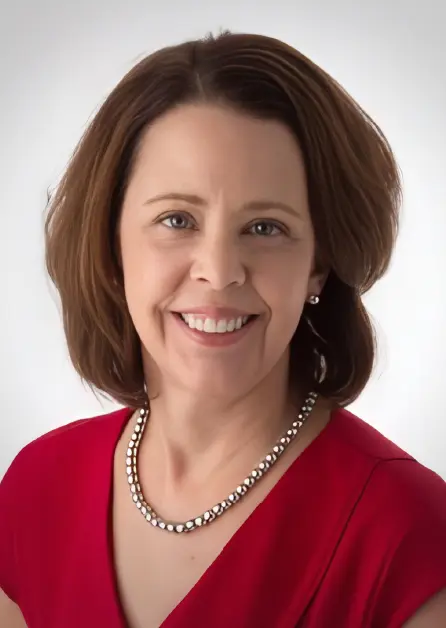
speaker
Diana E. Hess
Diana E. Hess is dean emerita of the School of Education at UW–Madison and a member of the National Academy of Education. She co-created The Discussion Project, a professional development program that helps educators create inclusive, engaging, and academically rigorous discussions in schools and co-created UW–Madison’s Deliberation Dinners, a project to provide undergraduates with opportunities to deliberate controversial political issues in ideologically diverse groups. She has authored two award winning books: Controversy in the Classroom: The Democratic Power of Discussion and The Political Classroom: Evidence and Ethics in Democratic Education. Dr. Hess began her career as a high school social studies teacher.
Morning Concurrent Sessions
9:55 – 10:55 AM
Just Help: Building a Better World | Room 205
Learn about ways to connect civic engagement beyond your classroom walls with playful resources from PBS. Drawing inspiration from multimedia collections including Xavier Riddle, Arthur, Wisconsin First Nations and Youth Stand Up, discover how to provide learning experiences that connect students to the people and places in their neighborhoods. Guide your learners in discovering how their local actions and collaborative efforts can positively impact their community by building a better world. (Grades 3-5)
JAMI HOEKSTRA COLLINS, Education Engagement Specialist, PBS Wisconsin Education
Before Wisconsin: Indigenous Histories, Peoples, Places & Sovereign Persistence | Room 209
Long before statehood, the land now known as Wisconsin was and continues to be the homelands of sovereign Tribal Nations. This session centers the histories, cultures, treaty rights, governance systems, and enduring relationships to land that affirm the inherent sovereignty of Indigenous Nations past, present, and future. Participants will examine Indigenous cultures, place-based knowledge, treaties, and self-governance shape both historical and contemporary realities for Tribal Nations. The session challenges narratives that confine Native peoples to early settlement or pre-1848 histories and instead emphasizes active sovereign persistence, resilience, and continuity. Grounded in accurate, authentic, and community-informed perspectives, this session equips educators with strategies to deepen implementation of American Indian Studies (Wisconsin Act 31) in a school district’s curriculum and classroom lessons. Participants will explore meaningful, sustained integration aligned to Wisconsin state statutes and academic standards, moving beyond standalone lessons or units toward embedded, year round practice. (Grades 3-12)
RON JETTY, Indigenous Education Coordinator, Mary T. Kellner Teacher Education Center, School of Education, UW–Madison
DAVID O’CONNOR, Education Consultant – American Indian Studies, Student Engagement Section, Bureau of Teaching and Learning, Wisconsin Department of Public Instruction
Local Roots of a National Story: University, Museum, and K–12 Partnerships in Teaching America at 250 | Room 213
Explore how local history can serve as a powerful entry point for civic learning, historical inquiry, and media literacy while deepening students’ understanding of America’s past and present. Learn how educators, museums, and universities collaborate to bring local stories into the classroom. Using examples from MKE Roots classroom resources and the Dr. James Cameron Pamphlet Collection, explore primary sources and local historical materials to investigate questions about democracy, citizenship, constitutional rights, and the ongoing struggle to realize America’s founding ideals. Connect with initiatives that empower young people to see themselves as active participants in their communities and in American democracy. (Grades 6-12)
MELISSA GIBSON, Faculty Director, MKE Roots Project, Center for Urban Research, Teaching & Outreach, Marquette University
LAUREN INSTENES, Program Manager, MKE Roots Project, Center for Urban Research, Teaching & Outreach, Marquette University
MIA PHIFER, Senior Education, Collections, & Outreach Coordinator, America’s Black Holocaust Museum
KALEENA STODDARD, MKE Roots Project Specialist, Marquette University
HEATHER GODLEY, Social Studies Teacher, Racine Case High School
Principles of America at 250 | Room 225
As Americans are gearing up to celebrate the 250th anniversary of the Declaration of Independence, teachers are exploring ways in which they can teach founding documents in a way that remains important and relevant. This session will provide insight on the Center’s educational framework–which utilizes storytelling, constitutional thinking skills, and civil dialogue–as they engage with principles around the founding document and its impact on Americans throughout history. (Grades 6-12)
JACLYN JECHA, Senior Manager of Curriculum Development, National Constitution Center
From Questions to Credibility: Empowering Student Voices Through Media Literacy | Room 226
Learn practical strategies for teaching media literacy, see real examples of student-driven reporting, and experience how story pitching, source evaluation, and journalist feedback can engage students in civic inquiry and critical thinking. (Grades 6-12)
JULIE TIEDENS, English Teacher and Media Advisor, PBS News Student Reporting Labs
Afternoon Concurrent Sessions
12:25 – 1:25 PM
Revitalizing the Principles and Practice of Democracy through the Power of Experiential Learning | Room 205
In a time of polarization and civic disengagement, experiential learning offers a powerful way to revitalize civil discourse and cultivate shared civic identity. This session, presented by the Center for Civic Education will showcase how civic education rooted in founding principles fosters transformative learning and stronger communities. We will highlight We the People and Project Citizen programs that build students’ constitutional knowledge and strengthen discourse skills, and build life-long civic habits. We will offer a fast-paced overview of Educating for American Democracy-aligned civic learning models including simulated congressional hearings and student-led projects. (Grades 3-12)
MICHAEL BLAUW, Director of Strategic Partnerships and Impact, Center for Civic Education
MICHAEL ARONOW, We the People (APPSE) Teacher/Coach, Wauwatosa East High School
Borderlands: Wisconsin 250 Years Ago | Room 209
What happens when the border crosses you? 250 years ago, in this place that we now call Wisconsin, the arrival of the American system from the east and south became part of a longer story of sovereignty, empire, economics, and culture that had taken shape over centuries. In this session, educators will learn about the many people and nations that had called this place home 250 years ago, and how the arrival of the newly created United States further complicated the tensions and relationships among people already here. Educators will use primary resources, firsthand accounts, and inquiry-based learning to explore this history and create learning resources to share with their students. (Grades 3-12)
ABBY PFISTERER, Chief Learning Officer, Wisconsin Historical Society
NICK HOFFMAN, Chief Creative Officer and State Historian, Wisconsin Historical Society
LEO LANDIS, Director of Curatorial Services, Wisconsin Historical Society
AMY ROSEBROUGH, State Archaeologist, Wisconsin Historical Society
Spot the Fake: Navigating AI-Generated Images in Education | Room 213
This session explores how students can develop media literacy, inquiry skills, and civic awareness through the analysis of AI-generated images and digital content. Participants will learn strategies that help students question sources, identify misinformation, recognize bias, and reflect on the ethical impact of AI on society and civic engagement. The session empowers educators to support students in becoming informed, critical, and responsible digital citizens in an AI-driven world. (Grades 3-12)
NATALIA RASAVONG, Multilanguage Teacher, Racine Unified School District
Many Nations, Many Perspectives: Reframing the American Revolution through Indigenous Voices | Room 225
During this session, educators will learn about the multiple perspectives present during the Revolutionary Era and how those perspectives can broaden our understandings of that time period. Through classroom resources created by PBS LearningMedia and PBS Wisconsin, discover how to bring the power of visual storytelling and a multitude of voices to your classroom. Specifically, we will highlight resources that amplify the voices of Native peoples and their experiences during the American Revolution. (Grades 3-12)
SAM HUNTER-GIBBS, Senior Manager, Audience Engagement, The American Revolution Initiative, PBS LearningMedia
JACLYN JECHA, Senior Manager of Curriculum Development, National Constitution Center
KATE VAN HAREN, 4th and 5th Grade Educator, Pittsville Elementary School
Growing Young Citizens: Civics in the Elementary Classroom | Room 226
Growing Young Citizens: Civics in the Elementary Classroom explores how educators can build civic understanding through daily classroom practices. Participants will learn practical, age-appropriate strategies that center student voice, foster community, and empower young learners to see themselves as active, engaged citizens. (Grades 3-5)
TONI FINK, Elementary Language Immersion Teacher, Milwaukee Spanish Immersion School
CAMILLE PARRA, Elementary Language Immersion Teacher, Milwaukee Spanish Immersion School
Partners

Supported by

Quotation

“You provide resources to teachers who need them. We’re so strapped for time, but we still value quality experiences for our students. You help us achieve more rigorous and engaging lessons.”