Driving Question: How is the food sovereignty of Indigenous communities affected by climate change?
Wild rice, known as manoomin in the Anishinaabe language, is more than just a plant in the lakes and rivers of the Great Lakes region. It plays an important ecological role and holds deep cultural significance for Indigenous communities. In this episode, Ami explores how environmental changes are affecting wild rice habitat and what that means for the ecosystems and Indigenous communities connected to it. Through conversations with researchers and cultural stewards, she learns how wild rice supports biodiversity, why it’s considered an indicator of environmental health, and how people are working to better understand and protect this important species.
Let's take a look
Questions to consider

What do you know about different kinds of rice and how they are grown and harvested?

What do you know about how wild rice is grown, harvested, or tastes?
Meet the Changemakers
Get to know the historians. Each historian in this episode has a card with information about that historian.
There are 4 cards to read.
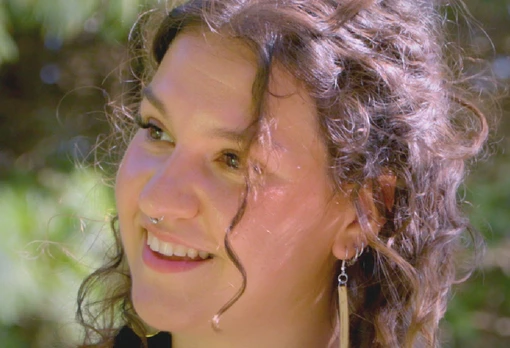
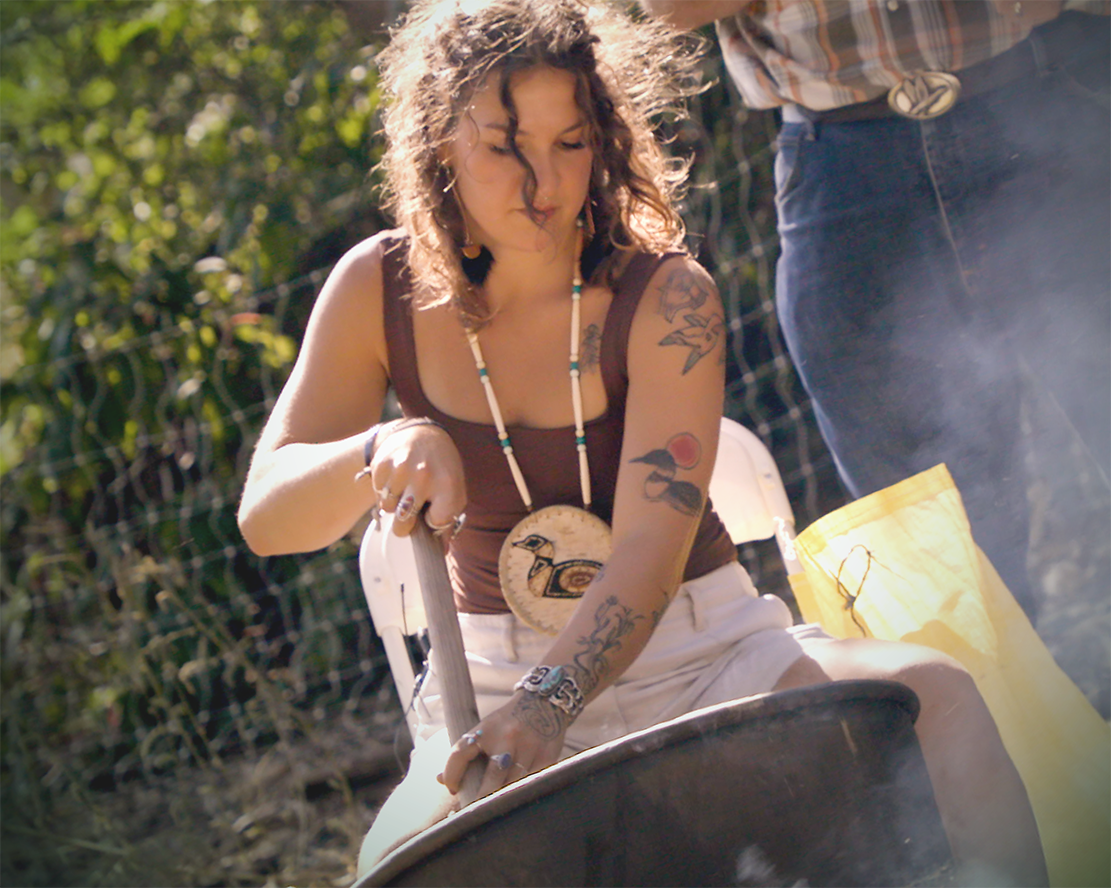
Sagen Quale
Agroecology Master’s Student
Boozhoo, Hello my name is Sagen and I am a steward of Manoomin. That means I work towards having a deeper understanding of this plant relative by harvesting her, researching her, reseeding her and eating her!

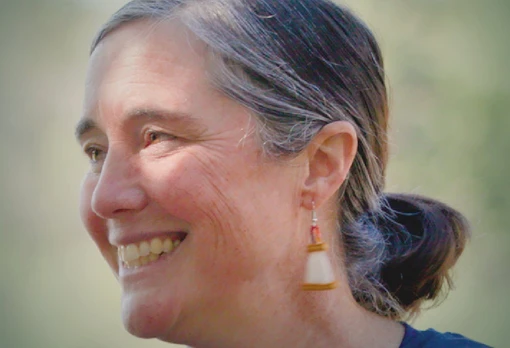
Gretchen Gerrish
Limnologist
My team asks questions and collects information that helps keep our waters healthy and home to cool plants and animals.
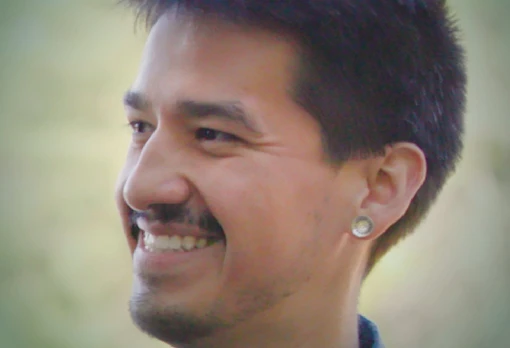
Ray Allen
Limnologist
I study fish and their parasites, and the humans that use lakes in Wisconsin.

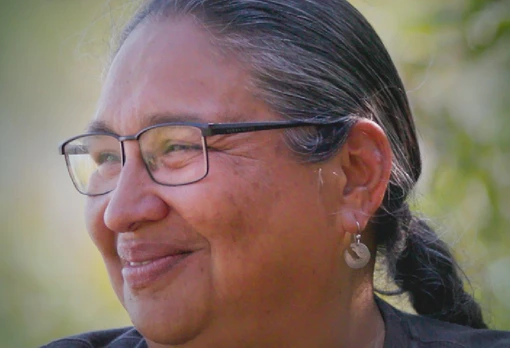
Kathy Smith
Genawendang Manoomin
My title, Genawendang Manoomin, means “She who takes care of the wild rice.” I care for and study wild rice and its waters, helping protect it so people and future generations can learn and harvest.
Quote from a historian
“Passing along the knowledge of manoomin was done for me and it's something I need to do for others.”
Sagen Quale
Bibliography
Benai, E. “The Migration of the Anishinabe.” The Mishomis Book: The Voice of the Ojibway, p. 102.
Gauthier, Cassie. “Easily Overlooked, Wild Rice Has Big Cultural and Ecological Impact.” Water Blogged: The Science & Stories of the Center for Limnology, UW-Madison Center for Limnology, 3 June 2021, https://blog.limnology.wisc.edu/2021/06/03/easily-overlooked-wild-rice-has-big-cultural-and-ecological-impact/.
“Literature Background.” Manoomin Education and Outreach Project, Wisconsin Sea Grant, seagrant.wisc.edu/manoomin/literature-background/. Accessed 1 Apr. 2026.
Smith, Kathleen. “Manoomin/Wild Rice: The Ecology and Importance of a Wetland Treasure.” Wisconsin Wetlands Association, Wisconsin Wetlands Association, 1 July 2025, https://www.wisconsinwetlands.org/updates/manoomin-wild-rice-the-ecology-and-importance-of-a-wetland-treasure/.
Thoresen, Katie. “Wild Rice Dwindled in Parts of the Upper Midwest. Now Efforts Are Underway to Bring It Back.” WXPR, Harvest Public Media | By, 9 Dec. 2024, www.wxpr.org/food-and-agriculture/2024-12-09/wild-rice-declines-great-lakes-restore.
“Wild Rice Harvesting.” Wisconsin Department of Natural Resources, dnr.wisconsin.gov/topic/wildlifehabitat/rice. Accessed 1 Apr. 2026.
Episode credits
Producer
Kylie Compe
Story
David Boffa
Ian Glodich
Tori Charnetzki
Kylie Compe
Ryan Hendricks
Script
Kylie Compe
Director of Photography
Ian Glodich
Videography
David Boffa
Ian Glodich
Tori Charnetzki
Kylie Compe
Editors
David Boffa
Kylie Compe
Host
Ami Eckard-Lee
Graphics and Design
Charles Barrows
Animations
Ian Glodich
Illustrations
Cam Erhardt
Special Guests
Sagen Quale
Gretchen Gerrish
Ray Allen
Kathy Smith
Translation Services
Rev
Captions
Catie Pfeifer
Educator Support Materials
Mia Forslund
Jen Kobylecky
Web Design
Charles Barrows
Erika Kachama-Nkoy
Web Development
John Vieth
Digital Content
Sigrid Peterson
Executive Producer
Ryan Hendricks
Director of Education
Megan Monday
Director of Television
Jon Miskowski
Special Thanks
Great Lakes Indian Fish and Wildlife Commission
UW-Center for Limnology
Project Advisors
Kevin Anderson
Science Education Consultant
Wisconsin Department of Public Instruction
Leigh Kohlmann
Independent Science Education Consultant
Oakfield, WI
Dolly Ledin
Wisconsin’s Green Fire
Madison, WI
Michael Notaro
Center for Climatic Research
Nelson Institute for Environmental Studies
University of Wisconsin–Madison
Victoria Rydberg-Nania
Environmental Education and Service Learning Consultant
Wisconsin Department of Public Instruction
Funding provided by
Dr. Annette Beyer-Mears in memory of Howard & Nelle Weiss, and Black Spruce Fund
Friends of PBS Wisconsin
Focus Fund for Education