Driving Question: How do the choices we make about clothing impact the environment?
The clothes we wear are a form of self-expression, but they also have a life cycle that impacts the environment. In this episode, Ami explores how textiles are made, used, and disposed of, and how those choices connect to climate change and plastic pollution. She learns about the differences between natural and synthetic fibers, how microplastics are created, and what drives fast fashion. Through conversations with experts, students, and community advocates, this episode looks at how extending the life of our clothing and making more mindful choices can reduce waste and environmental impact.
Let's take a look
Questions to consider

From what Majid Sarmadi shares, what are the advantages and disadvantages of natural and synthetic fibers for clothing?

Celine says that learning how to sew and mend clothing is empowering, why? How do these skills support sustainable fashion and creative expression?

Leslie and Ami discuss how our use of synthetic clothing can contribute to pollution. How does clothing made from plastic pollute the natural resources we rely on to live?
Meet the Changemakers
Get to know the historians. Each historian in this episode has a card with information about that historian.
There are 2 cards to read.
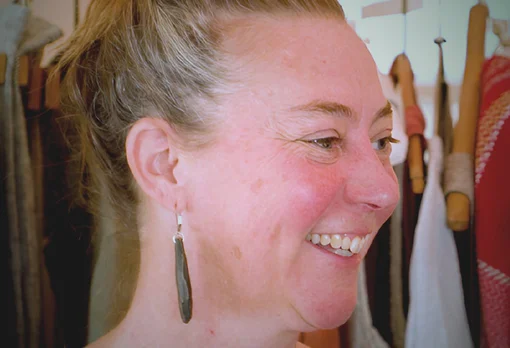
Leslie Schroeder
Founder
I’m the founder of the Midwest Linen Revival Project. I explore and promote the potential of growing flax for fiber in the Midwest.
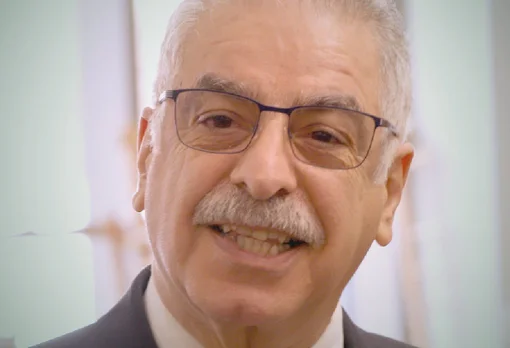
Majid Sarmadi
Professor Emeritus
I have been a professor and researcher for over four decades focusing on plasma chemistry to create more sustainable textiles and Polymeric materials.
Bonus Content
Go deeper with this episode. These video extras extend the story with real-world examples, expert insights, and close-up looks at the science and solutions behind the ideas you just explored.
Click on a tab above to begin.
How does a simple T-shirt go from raw fibers to finished clothing?
How can you tell if your clothes are actually sustainable?
View Transcript: English Transcript
Quote from a historian
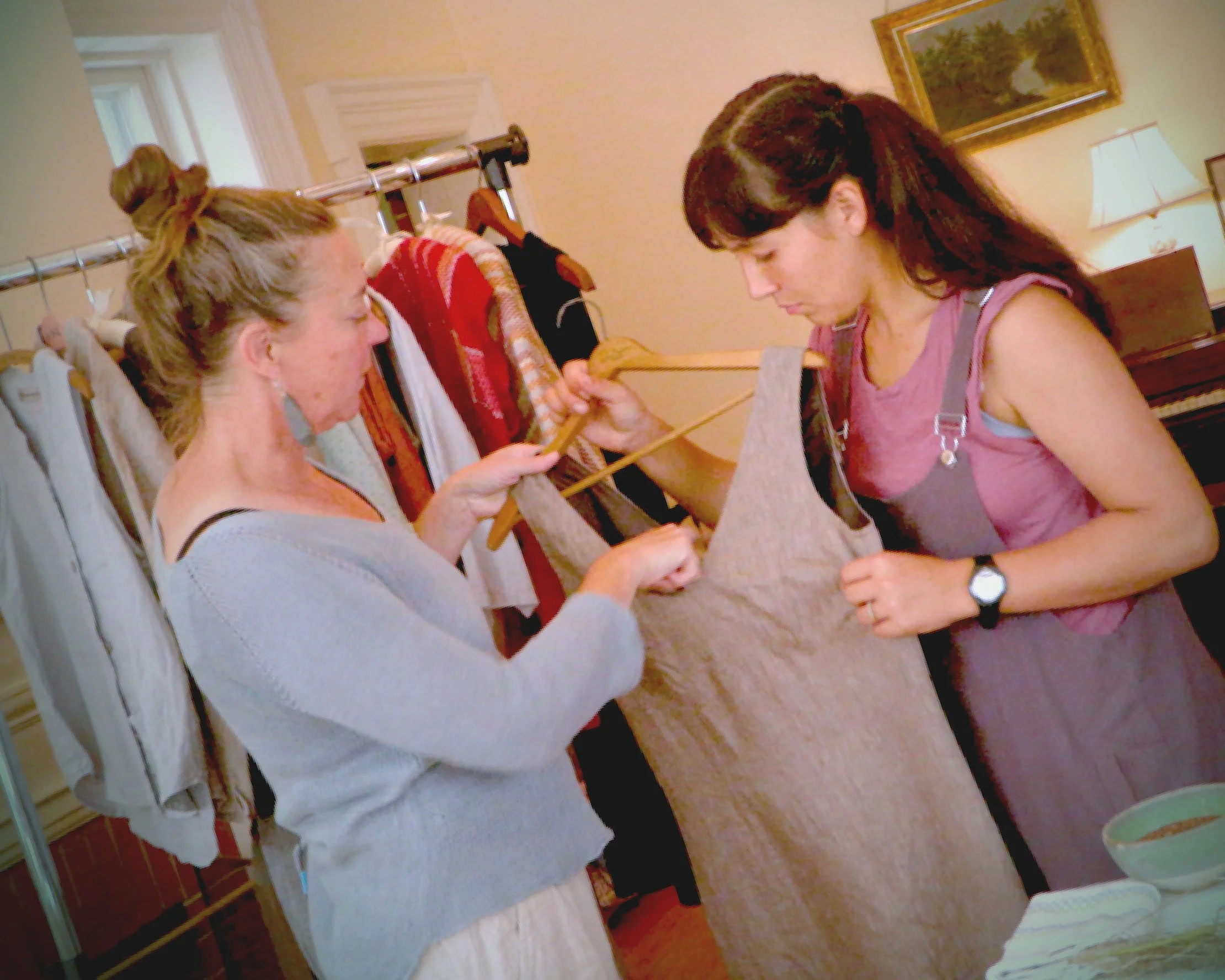
“By just learning to do something as simple as sew a patch or button, you could save your favorite sweatshirt, save money, and help save the planet.”
Celine Huttleston
Bibliography
Boucher, Julien, and Damien Friot. Primary Microplastics in the Oceans: A Global Evaluation of Sources. International Union for Conservation of Nature, 2017, portals.iucn.org/library/sites/library/files/documents/2017-002-En.pdf.
Chapagain, A.K., et al. “The water footprint of cotton consumption: An assessment of the impact of worldwide consumption of cotton products on the water resources in the cotton producing countries.” Ecological Economics, vol. 60, no. 1, Nov. 2006, pp. 186–203, https://doi.org/10.1016/j.ecolecon.2005.11.027.
“Consumerism.” Merriam-Webster, Merriam-Webster, 1 Apr. 2026, www.merriam-webster.com/dictionary/consumerism.
“Fast Fashion-Great for Your Wallet, Costly for the Planet.” U.S. Government Accountability Office (U.S. GAO), U.S. Government Accountability Office, 1 Apr. 2025, www.gao.gov/blog/fast-fashion-great-your-wallet-costly-planet.
“Greenwashing – the Deceptive Tactics behind Environmental Claims.” United Nations, United Nations, www.un.org/en/climatechange/science/climate-issues/greenwashing. Accessed 20 Apr. 2026.
“Microplastics Research.” Environmental Protection Agency, United States Environmental Protection Agency, 19 Mar. 2026, www.epa.gov/water-research/microplastics-research.
“The Environmental Impact of Fast Fashion, Explained.” Earth.Org, Dec. 2022, earth.org/fast-fashions-detrimental-effect-on-the-environment/.
“What Are Microplastics?” NOAA’s National Ocean Service, National Oceanic and Atmospheric Administration, 13 Apr. 2016, oceanservice.noaa.gov/facts/microplastics.html.
Yon, Valeria. “Water Footprint in the Home.” University of Florida: Institute of Food and Agricultural Sciences, University of Florida, 13 Jan. 2025, https://blogs.ifas.ufl.edu/sarasotaco/2025/01/13/water-footprint-in-the-home/.
Episode Credits
Producer
Kylie Compe
Story
David Boffa
Ian Glodich
Tori Charnetzki
Kylie Compe
Ryan Hendricks
Script
Kylie Compe
Director of Photography
Ian Glodich
Videography
David Boffa
Ian Glodich
Tori Charnetzki
Kylie Compe
Ryan Hendricks
Editor
Kylie Compe
Host
Ami Eckard-Lee
Graphics and Design
Charles Barrows
Animations
Ian Glodich
Illustrations
Cam Erhardt
Special Guests
Majid Sarmadi
Celine Huttleston
Leslie Schroeder
Translation Services
Rev
Captions
Catie Pfeifer
Educator Support Materials
Mia Forslund
Jen Kobylecky
Web Design
Charles Barrows
Erika Kachama-Nkoy
Web Development
John Vieth
Digital Content
Sigrid Peterson
Executive Producer
Ryan Hendricks
Director of Education
Megan Monday
Director of Television
Jon Miskowski
Special Thanks
UW-Madison School of Human Ecology
Textile Arts Center of Madison
Project Advisors
Kevin Anderson
Science Education Consultant
Wisconsin Department of Public Instruction
Leigh Kohlmann
Independent Science Education Consultant
Oakfield, WI
Dolly Ledin
Wisconsin’s Green Fire
Madison, WI
Michael Notaro
Center for Climatic Research
Nelson Institute for Environmental Studies
University of Wisconsin–Madison
Victoria Rydberg-Nania
Environmental Education and Service Learning Consultant
Wisconsin Department of Public Instruction
Funding provided by
Dr. Annette Beyer-Mears in memory of Howard & Nelle Weiss, and Black Spruce Fund
Friends of PBS Wisconsin
Focus Fund for Education