Driving Question: How are changes in climate impacting amphibians in our ecosystems?
Amphibians can tell us about the health of wetlands. Low populations can be signs of things like pollution or other ecosystem issues. Hear from scientists, volunteers, and actors who are exploring climate change through phenology. Then, learn what people can do to help protect our froggy friends and their homes.
Let's take a look
Meet the Changemakers
Get to know the historians. Each historian in this episode has a card with information about that historian.
There are 5 cards to read.
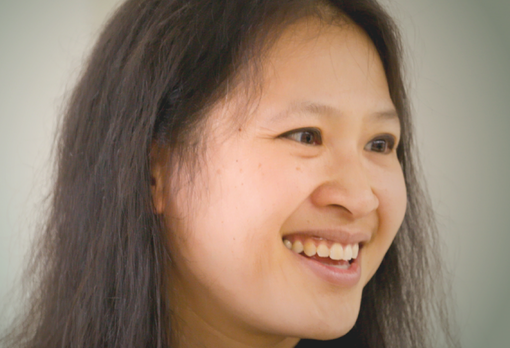
Jessica Hua
Ecologist
I study how environmental changes affect freshwater ecosystems and collaborate with communities to make science accessible and support conservation.

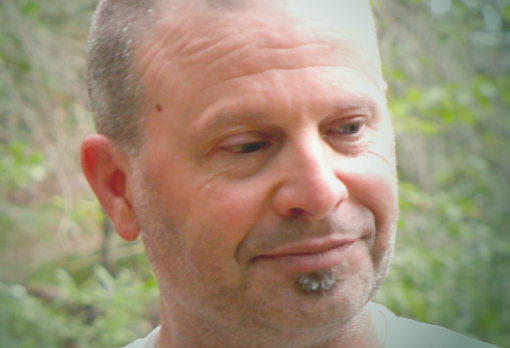
Travis Stuck
Volunteer
My family conducts annual frog surveys for two separate routes in Wisconsin from April through July. We have also participated in the Wisconsin Salamander survey.
Rhonda Stuck
Volunteer
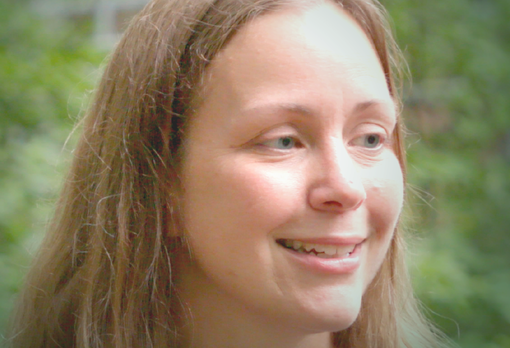
My family and I volunteer by collecting data for two separate Wisconsin Frog and Toad Survey routes during the spring and summer.
Miles Stuck
Volunteer
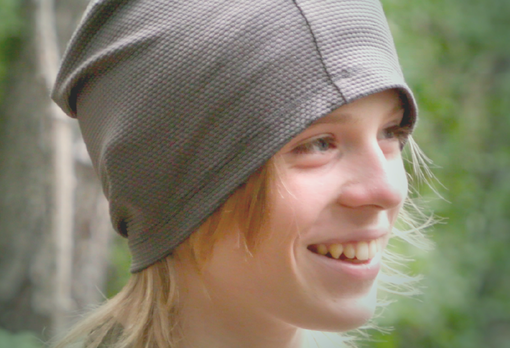
As a DNR volunteer, we mainly record data about the local frog population in Wisconsin.
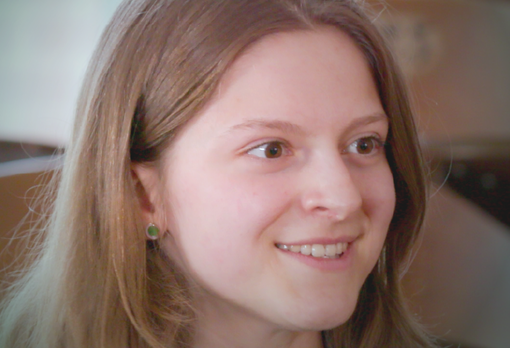
Chloe Maier
Director/Performer
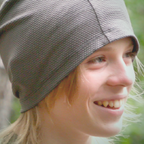
I am an actor, choreographer, and theatre educator who takes a special interest in sustainability and creating social change.

Bonus Content
Go deeper with this episode. These video extras extend the story with real-world examples, expert insights, and close-up looks at the science and solutions behind the ideas you just explored.
Click on a tab above to begin.
How did you set up your tadpole experiment, and what are you hoping to learn?
How does road salt affect wetland habitats?
What are vernal pools, and why are they important for amphibians?
What adaptations help frogs survive the winter?
What does an amphibian life cycle look like?
View Transcript: English Transcript
Quote from a historian
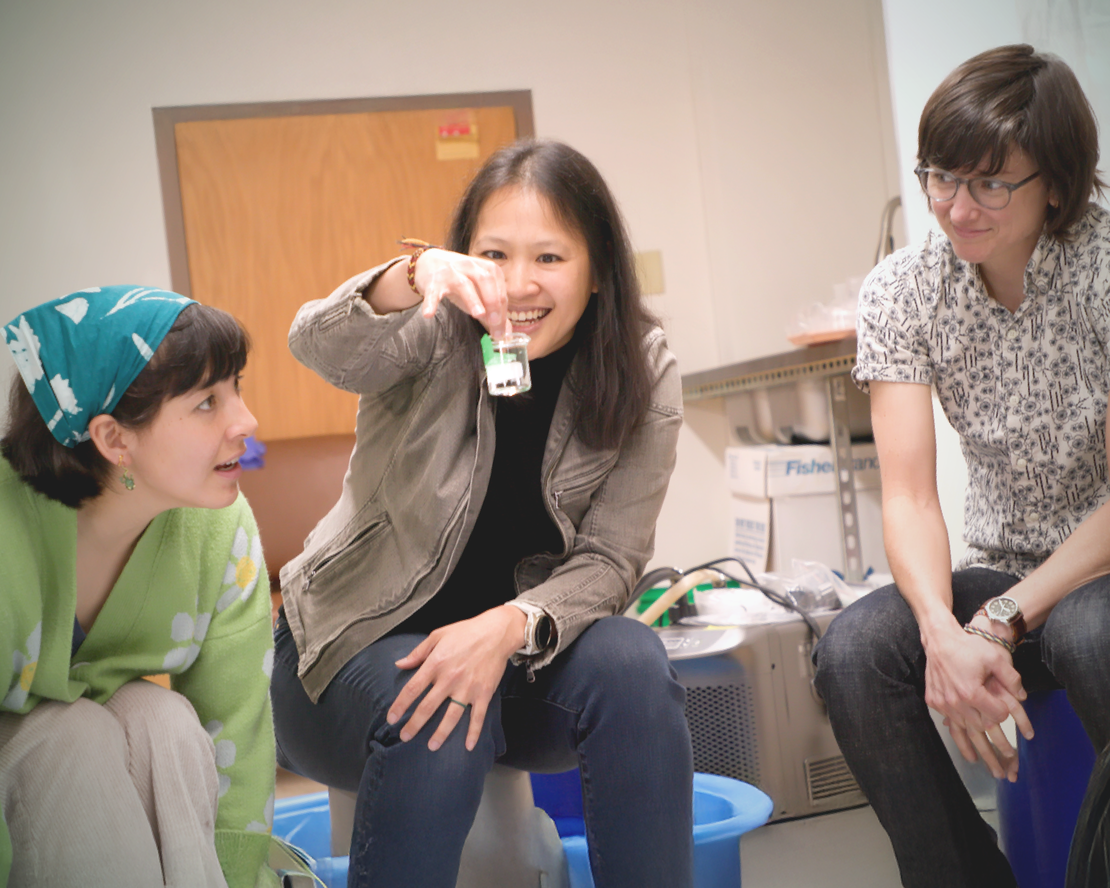
“Science is just a process. It’s a process of understanding the world and asking questions and thinking about creative ways to figure out answers to that question. And it’s something that anybody can do.”
Jessica Hua
Bibliography
“Adaptation.” Merriam-Webster.com Dictionary, Merriam-Webster, www.merriam-webster.com/dictionary/adaptation. Accessed 9 Oct. 2026.
Ambulkar, Archis. “Salinity.” Britannica, www.britannica.com/science/salinity. Accessed 9 Oct. 2026.
Braun, Sara. “Winter Getting Shorter in 80% of Major US Cities, New Data Shows.” The Guardian, Guardian News and Media, 27 Feb. 2026, www.theguardian.com/us-news/2026/feb/27/us-winters-getting-shorter.
“DNR Seeking Volunteers for Help with Frog and Toad Calling Surveys.” Wisconsin Department of Natural Resources, 26 Mar. 2026, dnr.wisconsin.gov/newsroom/release/119546.
“Frozen Frogs.” PBS LearningMedia, NOVA scienceNow, 29 Apr. 2026, wisconsin.pbslearningmedia.org/resource/lsps07.sci.life.evo.frozenfrogs/frozen-frogs/.
Igini, Martina. “41% of Amphibians Are Threatened with Extinction as Experts Blame Climate Change and Habitat Loss.” Earth.Org, Earth.Org, 7 Oct. 2023, earth.org/41-of-amphibians-are-threatened-with-extinction-as-experts-blame-climate-change-and-habitat-loss/.
“Inundated.” Cambridge Dictionary, dictionary.cambridge.org/us/dictionary/english/inundated. Accessed 9 Oct. 2026.
“Lake Michigan Shorelands Alliance.” Milwaukee Area Land Conservancy, Milwaukee Area Land Conservancy, www.mkeconservancy.org/lmsa.html. Accessed 9 Oct. 2026.
Lever, Annabel. “The Frog Life Cycle for Kids.” National Geographic Kids, National Geographic, 17 Apr. 2026, www.natgeokids.com/uk/discover/science/nature/frog-life-cycle/.
Luedtke, Jennifer A., et al. “Ongoing Declines for the World’s Amphibians in the Face of Emerging Threats.” Nature, vol. 622, no. 7982, Oct. 2023, pp. 308–314, https://doi.org/10.1038/s41586-023-06578-4.
“Other Features.” Wisconsin Department of Natural Resources, Wisconsin Department of Natural Resources, dnr.wisconsin.gov/topic/EndangeredResources/OtherFeatures. Accessed 9 Oct. 2026.
“Periphyton.” National Park Service, U.S. Department of the Interior, 4 Aug. 2025, www.nps.gov/bicy/learn/nature/periphyton.htm.
“Phenology.” Merriam-Webster.com Dictionary, Merriam-Webster, www.merriam-webster.com/dictionary/phenology. Accessed 9 Oct. 2026.
“Shorter Winters in 195 U.S. Cities.” Climate Central, 11 Feb. 2026, www.climatecentral.org/climate-matters/shorter-winters-in-195-us-cities.
“Spawn.” Merriam-Webster.com Dictionary, Merriam-Webster, www.merriam-webster.com/dictionary/spawn. Accessed 9 Oct. 2026.
“Species ID at Ephemeral Ponds / Vernal Ponds – Wisconsin Salamander Survey Training Module.” YouTube, uploaded by Wisconsin Department of Natural Resources, 20 Mar. 2025, www.youtube.com/watch?v=dJgDh2wHIFY.
“Vernal Pools.” EPA, Environmental Protection Agency, 15 Apr. 2026, www.epa.gov/wetlands/vernal-pools.
“Watersheds Map.” Reflo, refloh2o.com/watersheds-map. Accessed 9 Oct. 2026.
Episode Credits
Play Written By
Elyne Quad
Producer
Kylie Compe
Story
David Boffa
Ian Glodich
Tori Charnetzki
Kylie Compe
Ryan Hendricks
Script
Kylie Compe
Director of Photography
Ian Glodich
Videography
Mike Barron
David Boffa
Ian Glodich
Tori Charnetzki
Kylie Compe
Editors
David Boffa
Kylie Compe
Audio
Andy LaValley
Levi Schlimgen
Host
Ami Eckard-Lee
Graphics and Design
Charles Barrows
Animations
Ian Glodich
Illustrations
Cam Erhardt
Special Guests
Jessica Hua
Hilary Dugan
Travis Stuck
Rhonda Stuck
Miles Stuck
Chloe Maier
AJ Stoffels
Translation Services
Rev
Captions
Catie Pfeifer
Educator Support Materials
Kylie Compe
Mia Forslund
Jen Kobylecky
Sarah Wright
Web Design
Charles Barrows
Erika Kachama-Nkoy
Web Development
John Vieth
Digital Content
Sigrid Peterson
Mark Riechers
Executive Producer
Ryan Hendricks
Director of Education
Megan Monday
Director of Television
Kathy Bissen
Special Thanks
Wisconsin Department of Natural Resources
Project Advisors
Kevin Anderson
Science Education Consultant
Wisconsin Department of Public Instruction
Leigh Kohlmann
Independent Science Education Consultant
Oakfield, WI
Dolly Ledin
Wisconsin’s Green Fire
Madison, WI
Michael Notaro
Center for Climatic Research
Nelson Institute for Environmental Studies
University of Wisconsin–Madison
Victoria Rydberg-Nania
Environmental Education and Service Learning Consultant
Wisconsin Department of Public Instruction
Funding provided by
Dr. Annette Beyer-Mears in memory of Howard & Nelle Weiss, and Black Spruce Fund
Friends of PBS Wisconsin
Focus Fund for Education